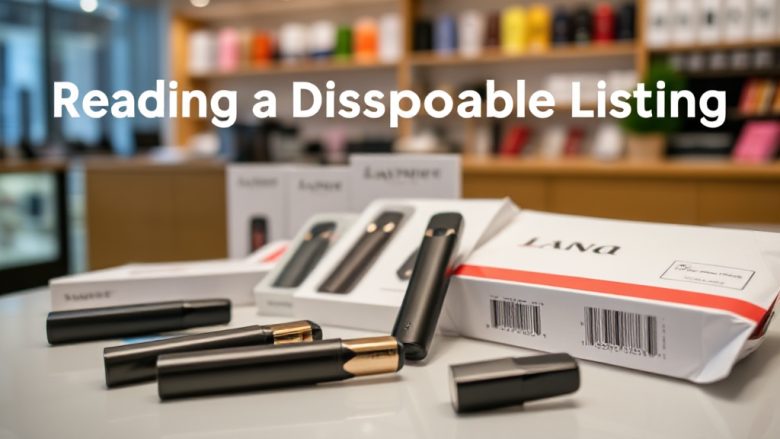
Reading a Disposable Listing: Signal Versus Decoration
Most vape listings are long but say very little. They stack adjectives, repeat the brand name, and bury the two or three facts that actually help you choose. If you are comparing options for SG Vape same day delivery, the skill that matters is separating signal from decoration. This piece teaches that skill using examples from the Lana range, so you can read any listing with a clearer eye.
High-signal details that actually help you choose
Signal is any detail that changes what you expect from the device or the order. It answers a question you would have asked anyway: how long will it last, how does it feel in use, and what happens after you click buy. A listing that gives you these facts earns attention; one that withholds them is asking for trust it has not built.
Capacity and puff count, stated plainly
Puff count is the first number most buyers scan, and it is useful only when it is paired with context. A disposable listed as 10,000 puffs tells you roughly how long it may last, but the number assumes a certain draw length and rhythm. Treat it as a range, not a promise. The same applies to pod volume in millilitres: it tells you how much e-liquid the device holds, which is often a more honest measure than a puff estimate.
When a listing gives both capacity and puff count, you can sanity-check them against each other. When it gives only a big puff number and no capacity, that is a signal too, just not a flattering one. A serious vape supplier singapore listing will usually state both because it expects buyers to compare.
Device format and draw style
Format is high signal because it tells you how the device behaves before you open the box. A compact disposable with a fixed mouthpiece suits a simple, pocketable routine. A larger format with a screen or adjustable airflow tells you the device expects more interaction. Neither is better in the abstract; the point is that the listing should say which one you are getting.
Draw style matters too. Mouth-to-lung and restricted direct-lung draws feel different, and a listing that names the intended draw style is helping you match the device to your habit. If the listing only says smooth or premium, it has told you nothing you can act on.
Authenticity and delivery terms
For online orders, the logistics details are as important as the hardware. A listing that states same-day express delivery and a cash-on-delivery option is giving you concrete information about how the purchase will work. That is signal. It tells you when to expect the parcel and how payment is handled, which matters more than another paragraph of brand praise.
Authenticity claims are signal only when they are specific. A line that says the stock is authentic Lana product and names the range is more useful than a generic guarantee badge. The same principle applies to Sg vape disposable listings across the category: the more precise the claim, the easier it is to verify later.
Low-signal decoration that pads a listing
Decoration is any detail that sounds impressive but does not change your decision. It is not necessarily false; it is simply not informative. Learning to skim past it is the fastest way to read a long listing in under a minute.
Adjectives without a referent
Words like premium, sleek, advanced, and next-generation are decoration unless they are attached to something measurable. Premium compared to what? Advanced in which respect? A listing that uses these words as headings and never answers the question is filling space. You can usually skip the sentence and lose nothing.
The tell is repetition. When the same flattering adjective appears three times in one paragraph, the writer is decorating, not describing. Signal tends to be specific and appears once.
Brand-name repetition as a substitute for facts
Repeating the brand name is not the same as explaining the product. A listing can mention Lana ten times and still not tell you the capacity, the format, or the delivery terms. Brand recognition is a reason to look closer, not a substitute for the details you need.
This is where careful reading pays off. A Singapore vape delivery listing that names the range, states the format, and explains the delivery window is doing real work. One that only repeats the name is coasting on familiarity.
Lifestyle imagery and vague claims
Lifestyle descriptions and vague quality claims are decoration because they cannot be checked. They describe a mood, not a device. That does not make them harmful, but they should not influence a comparison between two products. If two listings differ only in their lifestyle copy, they are effectively tied on information.
The practical move is to read decoration last, if at all. Scan for numbers, formats, and delivery terms first. Whatever remains is usually atmosphere.
A worked example from the Lana range
Imagine two listings for the same Lana Ultra 2 device. The first opens with three sentences about craftsmanship, then mentions the brand four times, then describes the packaging as premium. The second opens with capacity, states the draw style, names the pod compatibility, and closes with the same-day delivery window and COD option.
The second listing is shorter in feel but far more useful. You can compare it to another device on capacity, judge the draw style against your habit, and plan around the delivery window. The first listing gives you nothing to compare, which is exactly why it feels long.
This is the pattern to watch for across the category. A sg vape delivery listing that leads with logistics and hardware facts is telling you it expects a careful buyer. One that leads with atmosphere is telling you something else. Neither is automatically bad, but only one helps you decide.
What the example teaches
The lesson is not that decoration is dishonest. It is that decoration is low-cost for the seller and low-value for you. Signal costs the seller something to provide because it can be checked. That asymmetry is your best filter: the details that could be held against the seller are usually the ones worth reading.
Apply the same test to pod listings. A sg vape lana pod listing that states resistance, compatibility, and pack size is giving you checkable facts. One that describes the flavour journey in four sentences is giving you atmosphere. Both may be accurate, but only the first helps you choose between two pods.
The closing rule of thumb and common questions
Read every listing as if you had to explain your choice to a friend. If you can point to a capacity, a format, a compatibility note, and a delivery term, you have enough signal. If you can only point to adjectives, you are reading decoration. That single test will save you more time than any comparison chart.
One more habit worth building: check the delivery section before the product description. A listing that is clear about lana vape delivery windows and payment options is usually clear about the product too. Clarity tends to be consistent across a well-run shop.
Frequently asked questions
Is a higher puff count always better?
No. Puff count depends on draw length and rhythm, so it is a rough range rather than a guarantee. Compare capacity in millilitres alongside puff count, and treat both as estimates rather than promises.
Why do some listings avoid stating capacity?
Usually because capacity invites comparison. A listing that states capacity is confident enough to be measured against competitors. One that omits it is asking you to rely on brand impression instead.
How can I tell if a listing is describing a genuine product?
Look for specific, checkable claims: named range, stated format, capacity, and clear delivery terms. Vague guarantees are decoration. Specific details are signal, and they are easier to verify after delivery.
Does same-day delivery change how I should read a listing?
It should. Delivery terms are part of the product experience, so a listing that explains its delivery window and payment options is giving you information you will actually use. Read that section before you read the marketing copy.